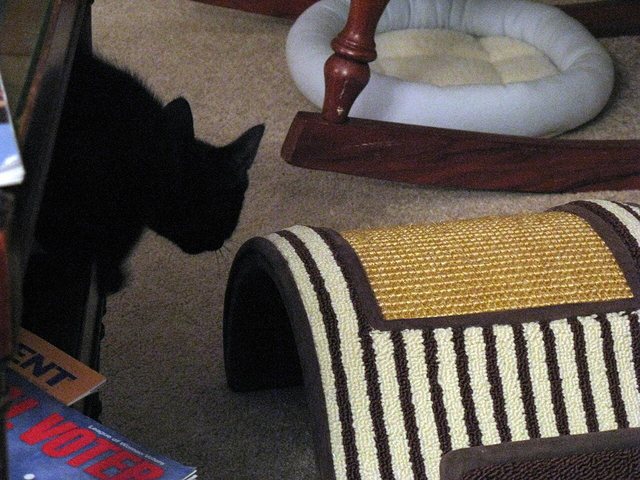
Keep the room familiar
Choose somewhere your cat already rests. Put a covered hiding place and familiar bedding there ahead of time, so the room does not become a sudden new confinement.
Separate the resources
Allow access to water, food and a litter tray, keeping the tray away from the feeding area. Check that a hiding cat can reach them without crossing a busy doorway.
Plan the evening
Secure outside doors and windows before dusk. Close curtains and keep ordinary household sound at a comfortable level. Let a hidden cat remain undisturbed rather than pulling them out.
Review distress afterwards
Note when hiding began and whether eating, toileting and normal movement resumed. Ask your vet about persistent distress and make an individual plan well before the next noisy event.
Keep it practical
Your checklist
- Prepare early
- Secure exits
- Leave hiding places available
- Record prolonged changes
Sources & further reading
- Cats Protection: preparing your home for a cat
- RSPCA: creating a good home for cats
- Blue Cross: fireworks and pets
Sources offer further context; a link is not an endorsement of this publication. This guide is general information and does not replace care from a vet familiar with your animal.
See our editorial policy and commercial disclosure. Please tell us about an error.