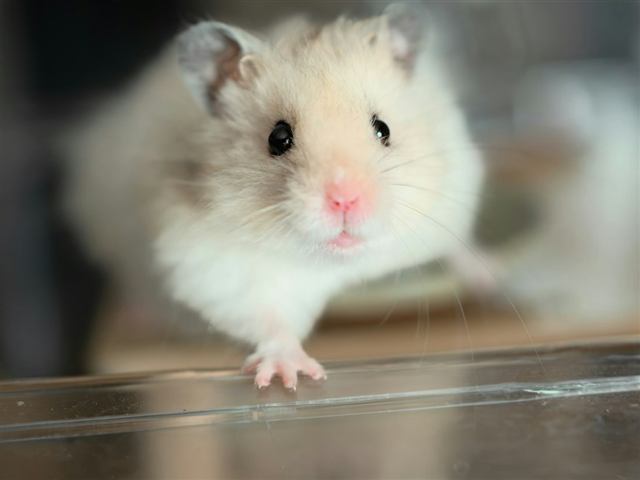
Prepare a controlled place to practice
Before reaching into the habitat, close the room, exclude other pets, and remove distractions. Have a secure, suitable carrier ready in case you need a temporary holding place. Avoid starting when you are rushing out, supervising another activity, or expecting a delivery. A calm ending is easier when you are not working against a deadline.
Any handling should take place close to a stable surface so a sudden movement does not turn into a fall. Clear gaps, edges, water, and objects that might trap the hamster. Wash and dry your hands first, especially after handling food. An adult should manage the session and any necessary transfer; a child should not be responsible for catching an escaping animal.
Let an approach be the first success
Begin with quiet observation outside the enclosure. When the hamster is alert, make your presence predictable with a soft voice and slow movements. Place a hand where the animal can investigate without cornering it or blocking its route to a hide. Do not reach down onto a sleeping hamster or chase it around the habitat.
Keep the first opportunities short. If you offer an appropriate small food item, account for it in the normal feeding plan. A treat is an invitation, not a reason to lure the animal onto an unstable surface. The useful question is whether it chooses to approach again after it has a clear opportunity to leave.
Support the whole animal when lifting
Once the hamster is comfortable approaching, use both hands to cup and support it. Keep hands low and close together, with no jump required to return to a safe surface. The RSPCA advises holding a hamster only a few inches above a stable surface. Avoid holding it by the scruff, squeezing it to prevent movement, or passing it between standing people.
A suitable tunnel or container can help with a necessary transfer if the hamster willingly enters it. Keep both openings secure during the transfer and move straight to the prepared destination. Practice this calmly before a veterinary visit becomes urgent. The container should allow ventilation and prevent escape; an open bowl is not a travel carrier.
Use behavior to choose the next step
Finish while the session is still calm. If the hamster repeatedly retreats, freezes, or tries to leave, reduce the demand and restore an easy exit. Do not interpret a bite as a training challenge that needs firmer handling. Review whether the animal was startled, trapped, asleep, or unable to retreat, and consider pain if behavior changes unexpectedly.
Record what happened in practical terms: 'approached hand twice, returned to hide when lifted.' That is more useful than labeling it friendly or difficult. Keep the next session at a level it has already managed. Avoid promising a fixed taming deadline; species, previous experiences, and individual preferences all affect the process.
Keep health care possible without forced social sessions
Ask an experienced veterinarian to demonstrate a suitable examination or transfer method if needed. Necessary treatment is different from optional play, and the safest approach may require professional help. Build a care routine that includes observation, secure transport, and cleaning even if the hamster does not become comfortable with extended handling.
Keep it practical
Your checklist
- Wait until the hamster is awake and alert.
- Prepare a closed area, stable low surface, and secure carrier.
- Let the hamster investigate rather than pursuing it.
- Support it with both hands and keep lifts low.
- End calmly, record what worked, and slow down after setbacks.
Sources & further reading
Sources offer further context; a link is not an endorsement of this publication. This guide is general information and does not replace care from a veterinarian familiar with your animal.
See our editorial policy and commercial disclosure. Please tell us about an error.